

China’s Strategic Expansion in African Ports Opportunities and Challenges for Global Trade
China’s investment in African ports is transforming global trade, offering new opportunities and challenges for businesses in supply chains and sustainability. As key ports in Africa become critical hubs, companies must adapt to shifts in resource access, efficiency, and environmental impact. Stay ahead with DW Global Sourcing as we navigate these changes in global trade.
CONSUMER ELECTRONICGLOBAL TRADECARBON CREDITSRENEWABLE ENERGYPARTNERSHIPESGSUSTAINABLE BUSINESSCHINA - AFRICAN BUSINESS
DW Global Sourcing Press
1/30/20262 min read
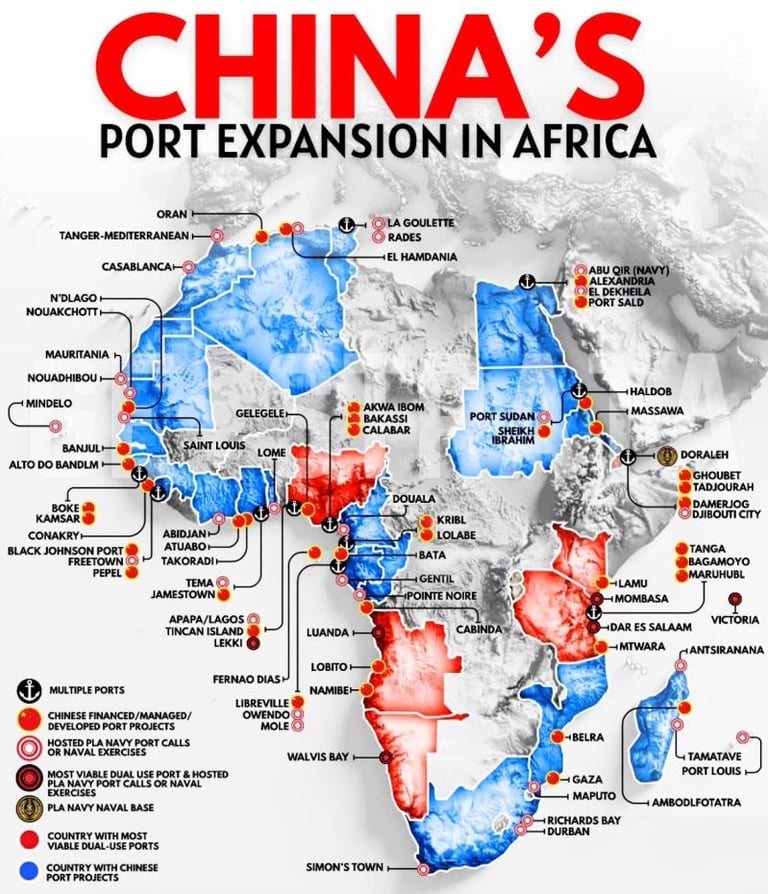
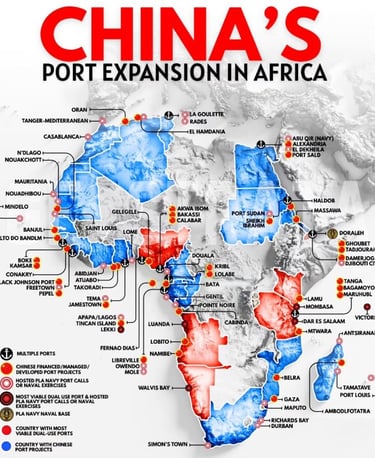
China’s growing role in developing and financing ports across Africa is more than just a logistics shift—it’s transforming how global trade flows and how businesses, particularly those in sustainable industries, must adapt.
If you look at the map of Chinese port investments in Africa, you’ll see a clear strategy. From the Mediterranean Sea to the Indian Ocean, ports in countries like Kenya, Nigeria, Egypt, and South Africa are becoming key hubs in the global supply chain. This expansion is not only about improving trade efficiency but also positioning China as a crucial player in the African trade ecosystem. Chinese companies are involved in 78 ports across 32 African countries (African Center for Strategic Studies), accounting for roughly one-third of the continent’s port infrastructure.
For a company like DW Global Sourcing, which focuses on green technologies and sustainable projects, this shift carries both exciting potential and a few challenges. Here’s why it matters:
Access to Resources & Market Leverage: China’s influence over strategic ports means that African exports—especially in energy and minerals—are becoming easier to transport. This is crucial for companies like ours that depend on raw materials for manufacturing. According to recent data, China-Africa trade has surpassed $200 billion by 2023 (Container News), and the control of key ports will only strengthen this trade relationship. However, with greater control over these key transit points, China could shift the power balance, impacting how companies negotiate prices and access resources.
Sustainability & Efficient Supply Chains: For businesses prioritizing environmental impact, like DW Global Sourcing, it’s important to consider how these port developments affect both operational costs and carbon footprints. While more efficient ports will streamline logistics and reduce travel times, companies must ensure that the environmental impact of these infrastructure projects is minimal and aligned with sustainable practices. The development of port infrastructure in Africa aligns with China’s broader strategy to improve maritime connectivity between Africa, Asia, and Europe (Council on Foreign Relations).
Geopolitical Considerations: As China strengthens its position in these ports, the political and economic implications for global trade are also growing. For businesses dealing with cross-border procurement, it’s crucial to understand the potential risks and benefits that come with new players controlling key choke points in the trade routes. The shift in control at these strategic points will also have long-term effects on shipping routes and trade finance dynamics, especially as geopolitical tensions rise (African Center for Strategic Studies).
Ultimately, China's expanding presence in African ports is reshaping trade routes, but it also brings a need for businesses to be more strategic. Understanding how these developments affect everything from resource access to environmental responsibility is key.
At DW Global Sourcing, we’re committed to helping businesses navigate this evolving landscape, ensuring that they can adapt to new opportunities while staying true to sustainable growth principles and international collaboration.
Stay connected with DW Global Sourcing News for insights on how the global trade landscape is changing and what it means for your business.
Sustainability
Connecting high-quality products with global markets efficiently.
CONTACT US
Info@dwglobalsourcing.com
+44(0) 7926242780
Building C, Xindetai High-tech Industrial Park, No. 8, Longgang District, Shenzhen, China


© 2026. All rights reserved.
12/F, Tai Sang Bank Building, 130-132 Des Voeux Road, Central, Hong Kong, SAR
OUR OFFICES